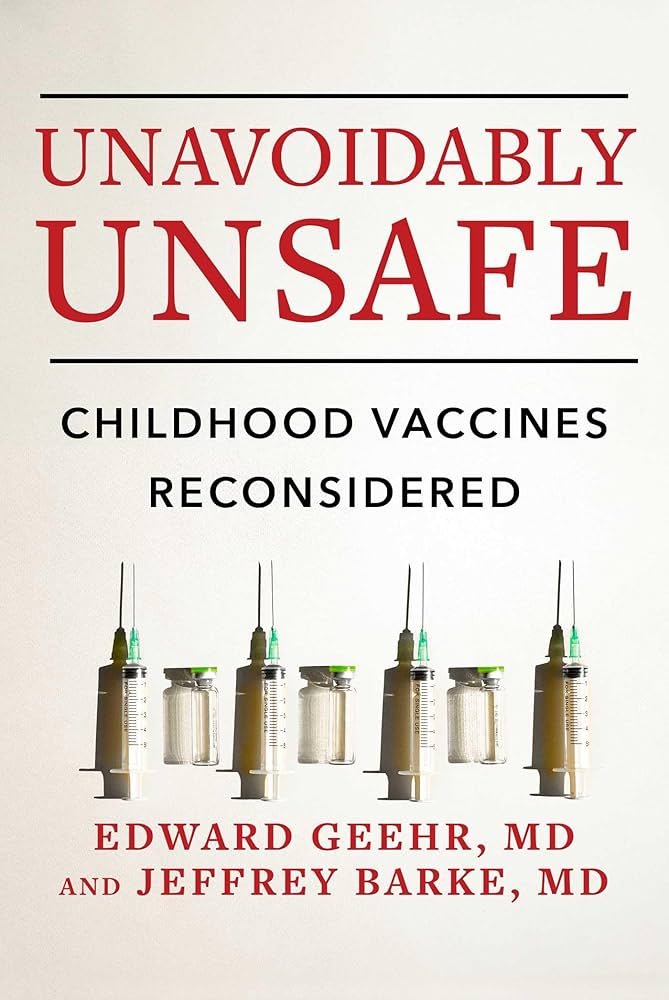
This particular blog post is divided by chapters. Heads up – this is pretty long and is meant to be read in pieces or as a basic reference guide.
CHAPTER 3
In chapter 3 the authors start with a familiar antivax strategy, which I call “citation falsification”. This means that the authors claim that there is an A-F grading of vaccines along with an “overall grade as an indicator of risks vs benefits”. The problem is, when the reader directly consults this source, this framework does not exist in the form that the authors of the book claim it does (the CDC/ ACIP use an Evidence to Recommendation framework along with GRADE assessments). While the authors lament the vaccines not “inspir[ing] confidence in the vaccine approval process”, I lament the author’s lack of ability to do a task as simple as honestly describing what a citation says. They are using a second antivax tactic, which is to set up a distortion in the beginning of the chapter so the unsuspecting reader may trust what they say later on in the chapter (which by the way, is full of mistakes).
Their first major mistake is to assert that no vaccines have been subject to randomized controlled trials versus a placebo, which is a failure of really simple fact checking – even his fellow antivaxxers can find vaccine trials that used a saline placebo.
Their next mistake is to complain about the choices of control groups. Typically antivaxxers strive for the highest levels of ethics according to their insistence on the Nuremburg Code – but they do like to swipe that aside when it suits them. The ethics of choosing a vaccine control group, in general terms, is as follows. When a brand-new vaccine is being created with no comparison vaccine, it is ethical to use saline (salt water with similar saltiness as the body) as a placebo comparison. However, when a vaccine is being created as an update to an old vaccine (like the pneumococcal vaccine that they talk about), a comparison should be made to the old vaccine. The original trial will assess the safety of the inert ingredients by comparing placebo to vaccine, and the later trials will affirm the safety of the new vaccine compared to the old vaccine. Comparing a new vaccine to a saline placebo deprives the control group of protection against disease, which by all modern standards of infectious disease research, is unethical.
Next up, they complain that most people are not given “true informed consent”. The antivax definition of true informed consent seems to be a full assessment of the information contained in the vaccine inserts. Pediatricians actually don’t have anything against fully reviewing the information in the inserts. The antivaxxers forget that most pediatric visits last 15 minutes – and this is never enough time to discuss the shelves of research articles that go into the vaccine inserts. Pediatricians are certainly capable of addressing the studies in the inserts if needed, but if a family decides that they want to go through the document line by line, they can do so at any time. If a family insists that this be done in the office, they should prepare for multiple visits or use the physician messaging system.
Next up, they engage in falsification of the definition of herd immunity – while clean water and sanitation are very important to have, the measles vaccine (and in 2024 the pertussis vaccine) illustrate to us, that every time we have a decline in vaccination rates below the herd immunity threshold, people get sick and sometimes require significant medical care. A rather well known antivaxxer, Robert F Kennedy Jr, directly contributed to the Samoan measles outbreak. Definition falsification is another antivax strategy to try and lure the reader into thinking about the wrong definition in order to believe an upcoming more significant distortion.
Chapter 4 – COVID19
The book authors wake up on the wrong side of the bed and try to take a quote out of context – they claim that Fauci declared “The best vaccination is to get infected yourself”. This tactic of taking quotes out of context is going to be familiar to politicians everywhere, and the reader should not fall for it. Fauci was talking about influenza, in 2004, during an era where COVID did not exist. In addition, there was an influenza vaccine shortage, and he was answering a question about a call-in session where a US citizen asked what to do about influenza vaccination after already getting influenza. Due to the considerable differences in transmissibility and lethality of the two viruses, this statement doesn’t apply to COVID.
When we read further in this chapter, we see that the previous distortion employed in Chapter 3 is used to create a seemingly official “vaccine grade sheet” of the COVID vaccine. All their points are distortions, lies, or misrepresentations. Children are at highest risk of severe COVID illness/ death when they are medically vulnerable or very young – the first generalization does not stand. The vaccine was never billed as something that would prevent viral replication entirely, and so criticizing its ability to prevent replication is irrelevant. This role falls to antiviral medications such as paxlovid. The vaccine did prevent transmission very well with the initial variants, but as is true for most viruses, they evolve to propagate themselves, and all variants of the Omicron variant were much more transmissible, making both masking and vaccination less effective (citation Infectious Disease Society of America). The COVID vaccine has been approved for use for quite some time, so this represents a very simple failure of fact-finding by the book authors. The COVID vaccines have been supported by multiple RCTs, including the initial trials needed for the vaccines to get emergency use authorization. The vaccine’s major cardiovascular side effect has been established, which is vaccine myocarditis and pericarditis, and this is now probably the most well studied side effect in all of vaccine history. The vaccine does not create lifelong immunity due to the ability of SARS-COV2 to mutate, but this has been true of all prior coronaviruses. Herd immunity may not be possible with SARS-COV2 due to its rapid rate of mutation and waning immunity after vaccination, but protection from severe disease still stands.
Chapter 5 mainly rehashes falsehoods about the hepatitis B vaccine which I have covered in my other blog posts, here, here, and here.
Chapter 6 – RSV vaccines
Chapter 6 delves into the new RSV vaccines (new as of 2023-2024), and their utility for children. As is typical of the antivax ecosystem, they need to try as hard as possible to demonize vaccines as soon as they come out. As is typical, they make the same mistakes for this new vaccine as they do for the old one, and even mix up their classifications, as Nirsevimab is not a vaccine in the strict sense of the word, it provides antibodies (passive immunity) to the recipient. In their discussion of how children are at risk of severe RSV illness/ death, they neglect to mention that RSV caused over 3 million hospitalizations in 2019, and an antibody that can decrease that number would decrease healthcare costs and morbidity to a lot of patients. Next up, they complain that the clinical trials were paid for by the vaccine manufacturers, AstraZeneca, and Sanofi. However, they provide no practical solution of an alternative funding source that could provide the typically billions of dollars necessary to fund these trials (many people would say that pharma wants to release vaccines, so they need to pay for trials). The complaint that carcinogenesis/ mutagenesis studies were not performed is invalid because the companies have not had enough time to study that yet. Grading nirsevimab as being unable to create lifelong immunity/ herd immunity is invalid, because donation of temporarily provided antibodies bypasses the normal immune response and by definition doesn’t create long lived memory cells; the infection itself may be able to do that in certain people, but it is intellectually dishonest to fail to put this into the context that even natural RSV infection doesn’t necessarily produce lifelong immunity. RSV is milder in older kids and adults because they have bigger lung capacity and bigger airways, making the overall need for respiratory support significantly less. While they also complain that the initial clinical trial showed no statistically significant difference in hospitalization, it is intellectually dishonest of the book authors to omit the other large clinical trial assessing nirsevimab in infants, which did find a statistically significant reduction in hospitalization after giving nirsevimab.
Chapter 7 – Influenza vaccine. I have previously blogged about this vaccine here, as usual the book Unavoidably Unsafe just rehashes the same major talking points as every other antivax book.
Chapter 8 – DTaP vaccine. I have previously blogged about this vaccine here.
Chapter 9 – MMR vaccine, let’s do this one in detail. Their first mistake is to share that the case fatality rate dropped from 21 death per 1000 cases to less than 1 death per 1000 cases. This as an isolated fact is true, but is misleading due to lack of context. The antivax ecosystem loves to remind people that only dying from a disease is bad, but the other side effects are OK. They sort of start realizing why measles is nasty in the next paragraph, but don’t connect the dots – they mention subacute sclerosing panencephalitis, which is a rare but almost uniformly fatal brain disorder that occurs after measles (again, the antivaxxers love to omit context). They also love to omit that measles is capable of deleting your entire immune system’s memory to all prior infections – which means the kid sustaining measles is susceptible to all those infections, all over again, for several years. Back to that graph (the correct graph is reproduced here) – the biggest mistake the book authors made is failing to share that measles cases did not go down until the measles vaccine was rolled out. As long as measles is transmitting in a community, some kids can get very ill and suffer severe consequences. The other thought to consider is that we vaccinate to prevent severe disease outcomes – the authors insinuate that because the rare severe disease outcomes are rare, they don’t matter. That is because the antivaxxers rarely have to deal directly with those consequences. Antivaxxers aren’t coming to rescue the 2-year-old with measles pneumonia – a physician is. When the antivaxxer has made his/ her money, the antivaxxer walks away. It is a correct assessment that the measles vaccine prevents significant infection and replication when given on time. Their assessment about vaccines preventing transmission is false by omission – there are periodic outbreaks among immunized children precisely because antivaxxers periodically go around and help decrease vaccination rates by spreading fear. The statement that there is no MMR randomized control trial is simply false – a basic search engine query will reveal several, as will a thorough assessment of the vaccine insert (which curiously the antivaxxers always admonish the reader to do but never notice the RCTs). Their next statement about MMR vaccine safety is a blatant misrepresentation. They note several side effects in patients with known immunodeficiency, but try to generalize that to the entire population. MMR vaccines are clearly labeled to not be given to those carrying immunodeficiencies, in fact, this is a contraindication. They try to next scare the reader about measles vaccine induced SSPE – except they forget to include that the case study in which this occurred was in a person with previously undiscovered measles infection (other case studies make similar discoveries). Next, they claim that measles vaccines cause autism – the entire country of Denmark was studied more than once specifically to look into this, and no, vaccines don’t cause autism. The strongest experimental evidence comes from the world of brain scans – the brain changes consistent with autism can be found in babies before they are born, well before anybody is getting vaccinated. Vaccines don’t time travel. Next, they complain that the MMR vaccine’s efficacy source is not disclosed. If they had went to Plotkin’s Vaccines, they could read all the clinical trials and clinical efficacy data. They complain that measles vaccine carries waning immunity as quantified by antibodies in the bloodstream. The mistake with this train of logic is that they only cite half the source that this data comes from: multiple sources of information indicate that clinical immunity is still very good. They also seem to have forgotten that science welcomes thoughtful debate – some vaccine scientists do indeed advocate for measles boosters in limited cases although this has not become an official public health recommendation for the general adult. I repeat – in order to gain natural immunity, the person getting the infection has to gamble with the possible side effects of serious measles disease first, whose consequences are lost on the antivaxxers who wrote this book. The same problem underlies their thinking that measles infection protects against cancer – you shouldn’t advise someone to get in a traffic accident to protect against future traffic accidents. Next, they commit a simple error in fact checking – the duration of vaccine immunity on average is quite well known (decades according to Plotkin’s Vaccines) and herd immunity is periodically diminished when vaccines rates go down. The statement “powerful, artificial immune system stimulation” is a word salad designed to intimidate the reader. First off, powerful and artificial doesn’t characterize anything done to the immune system – if you asked the immune system to do a task (responding to a vaccine), it will do it by itself. No robots or assembly lines were involved in the process. Next, the immune system won’t be overstimulated by a few vaccines – it is at minimum responding to thousands of events at any one time, and an intact immune system can efficiently keep the outside world outside. They make all the same logical mistakes in the mumps and rubella sections. Rubella may not commonly create illness severe enough to land a child in the hospital – but its long-term consequences such as congenital heart disease and deafness are so significant that it is not worth gambling with them just to achieve virus-derived immunity.
Chapter 10 is addressed above – measles vaccines don’t create autism despite how much the antivaxxers want it to. Let’s deal with a few specific allegations. They cite the Madsen study and point out its mistakes but forget their mistakes in their analysis: First off, epidemiologists from different countries are going to collaborate and sometimes have employment in more than one organization. That’s been a thing since the earliest days of epidemiology, and occurs in multiple disciplines outside even outside of science. People who work in the same field are naturally going to want to collaborate professionally when there are shared interests. The authors think they have a “gotcha” here, but they most certainly do not. Next, the authors used an old antivax trope, that if only they could see the raw data all the time, they would be able to produce studies that support the antivaxxer narrative. The current mainstream medical position is that the association between MMR vaccination and autism is either zero or so small as to be practically speaking, indistinguishable from zero. Here’s why – I actually read the study. First off, there are several more modern studies that refute any relationship between MMR vaccines and autism. Antivaxxers keep on trying to recycle this claim because they think some people can be duped. Next, the calculations shown in the study are only suspicious if you have no idea what you are looking at. They criticize that there is an 8 percent lower risk of autism in the MMR vaccinated children. They then fail to read the fact that the authors specifically mentioned, that they have tight confidence intervals (high confidence in the statistical result) demonstrating the two groups being compared are not statistically any different. If the book authors want to be seen as having any credibility at all analyzing studies, they shouldn’t be making such a simple mistake. Let’s next look at the study and the table they are referencing:
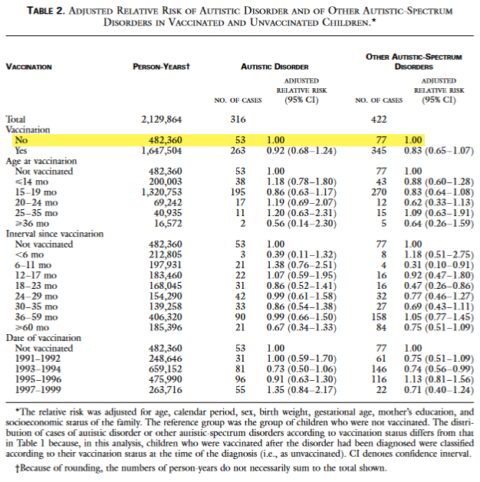
The only pair of numbers up top that differ by 45% are the 53 and 77, which are numbers that delineate the number of children diagnosed with autism, versus the number of children with other autism spectrum disorders. Both were in the unvaccinated group. Let’s be real here – the authors can’t even distinguish the vaccinated from the unvaccinated groups correctly when reading a study. These two points alone should trash their claims. They cite the Mawson studies as a remedy to the “mistakes” they think they found in the Madsen study – forgetting to mention to the author that Mawson’s studies have several retractions and serious mistakes of their own. Lastly, the measles vaccine ingredients do not systematically cause brain inflammation no matter how much the authors want it to.
Overall, part two of the book is a circus show of mistakes that don’t require a science fan to spot – there are a litany of mistakes in even basic fact finding.
 Frank Han's Cardiology Corner
Leave a comment