Chapter 17 – mRNA vaccines
Their first mistaken argument is that the FDA has never approved a vaccine that gives instructions like mRNA – they only have to look to the world of cardiology to see injectable medications like mipomersen that fit this description. They next try to conflate gene editing with the production of a mRNA vaccine; this assumes that their antivax audience members lack the lowest level of molecular biology knowledge. While there are injectable RNAs meant to silence certain genes, mRNA vaccines can be modified to do different tasks and, not all of those are meant to change gene expression. Indirectly, this is a complaint that mRNA vaccines cause cancer, which is a trope that has been used for decades against vaccines, and remains false as it pertains to mRNA vaccines (citation American Cancer Society). The cancer society has been looking, and the rise in cancers reported already started way before COVID vaccines. As is still true about COVID Vaccines – they cannot time travel.
They next repeat a tired old argument that if something is old it must be good – and cite the Athenian plague. What they leave out is that life expectancy back in those times was much worse than it was today, as was medical care overall. They lament that the COVID vaccines need to be changed for every variant but – as it pertains to COVID vaccines, the book authors leave out the fact there are other groups trying to figure out how to vaccinate against all the coronaviruses all at once. Again, in the old days, natural immunity failing, meant that you died.
Next, they argue that modRNA is not the same as normal mRNA. This is false, as the idea to modify vaccine mRNA to make it more stable was actually inspired by natural modifications of different kinds of normally occurring RNA. Next, they argue that self-amplifying RNA has no means to stop. They forget that according to the rules of normal biology, this kind of RNA is removed just like the RNA from every other viral infection caused by RNA containing viruses (citation Campbell’s Biology).
We already have information from the commercially available COVID vaccines that COVID vaccines protect against autoimmune diseases, not increase them – and information on the self-amplifying version of the COVID vaccine will most certainly come with its own research answering this question.
Next, they complain that the mRNA is hiding out for weeks in the lymph nodes after injection – which is citation falsification, as the actual article that this was misinterpreted from indicated that partial and full spike protein was found in germinal centers, which to an immunologist don’t mean the same thing. Pieces of viruses and bacteria are routinely brought to lymph nodes for a few weeks for immune processing (citation Janeway’s Immunology).
The lifespan of mRNA in a vaccine has been studied by multiple universities by now, and it is a few weeks plus or minus a few weeks (sources here and here and here). Despite their exhortations that persistence of spike protein leads to too many side effects, viral infection produces significantly more spike proteins than does vaccination.
Next they try to convince the reader that the article on COVID vaccine related frameshifting is another potential avenue for side effects – on this point they are wrong again.
With the complete set of evidence so far, their next complaints about the lipid nanoparticle do have some merit, but again, RNA does have to get into the cell by some transport mechanism. This is a classic case of twisting a kernel of truth. The American College of Obstetrics and Gynecology, and its British equivalent, the Royal College of Obstetrics and Gynaecology, have abundant research indicating that the COVID vaccine is crucial for pregnant mothers, as they represent a group of people at high risk for severe COVID disease both for themselves and the eventual infant. The public service announcements of the COVID vaccine were indeed mistaken when they asserted with strong confidence that the COVID vaccine only stays in the shoulder, however antivaxxers are well known for not giving science room to change, specifically when it suits them. Meaning, they can complain that science should be able to adapt to changing experimental data and opinions, but seemingly sweep that aside when they have an axe to grind about something (internal consistency is not an antivaxxer’s strong point). They then complain about Pfizer falsifying the biodistribution data about the COVID vaccine, except the book authors misunderstood the research completely and willfully, as they have done for the prior chapters. Biochemically correct interpretations exist here and here.
Next up in their descriptions of the innate and adaptive immune system, they miss the numerous books and research articles on how one COVID vaccine induces cross protection against other COVID variants (citation Janeway Immunology).
Next up in their explanation of how the mRNA vaccines damage the immune system, they simply cite that vaccine derived antibodies compete with the antibodies derived from the immune system’s interactions with the virus. This is entirely ignorant of the fact that the immune system had to work to generate both types of antibodies, and both types of challenges generate long lived plasma cells that help form immune memory (although there is legitimate debate about the exact longevity of those plasma cells). No actual damage is occurring. The observation that some kids get more kinds of other viral infections is complicated by different kinds of statistical biases, not by an actual immunodeficiency created by these vaccines. Complaining that antibody numbers do not correlate with disease protection has been superseded for many years by actual clinical research indicating how much they correlate (citation Infectious Disease Society of America). They make the same mistake with their description of natural immunity as they have throughout the book – to get natural immunity you have to gamble with the disease first.
Saying that immune system confusion results in autoimmune disease is a gross oversimplification and outright wrong from certain perspectives – for example the root cause of multiple sclerosis has been discovered, and it is likely to be EBV infection.
Complaining about nonsterilizing infection omits that many of our other vaccines don’t create sterilizing immunity, but still work very well against serious disease (citation Plotkin’s Vaccines). Their statement that mRNA vaccination makes children less capable of fighting off common viruses comes with no rationale whatsoever; they just expect the reader to believe them (PS Science never just expects the reader to believe). Complaining about original antigenic sin is actually superseded by a simple point – COVID vaccines provide immunity to more than one strain despite the fact that they were designed for just one strain (citation: multiple ACIP COVID vaccine reports). For those interested, a really deep multi-page dive into immune imprinting can be found here.
Naturally, at the end of this chapter, the authors found the Cleveland clinic study concerning COVID vaccine boosters worthy of their cause – but this study should be looked at with quite a few caveats (remember for an antivaxxer, a caveat only is meaningful when it supports their cause). One caveat is that the study has already been largely superseded by a better study directly assessing booster COVID vaccination, which delineates who gets the most benefit. The other epidemiological caveats involve confounding variables, which are much more thoughtfully explained here.
Chapter 18 – HPV vaccination
The book authors set up this chapter by trying to attempt a time distortion. They claim that because young girls and teen girls don’t really get diagnosed with cervical cancer, therefore, the vaccination is not really important because it is the adults who are getting the cervical cancer. This makes the rather junior level logical error of forgetting that it is the young adults who are getting the HPV, and then getting cancer at variable times after the initial infection (which may have little or no symptoms). This also forgets that MEN also need to care about HPV, due to its ability to generate oral, anal, and penile cancers. HPV infection is a problem in the general population as well as the immune suppressed/ genetically at risk (Plotkin’s Vaccines).
Regular PAP smears may lead to surgical procedures if cancer is found, and remember, there are also side effects to the surgical procedure intended to remove the cancer (and no cure yet exists).
Next, the authors ignored the strongest evidence yet supporting HPV infection – HPV related cervical cancer has actually been eliminated in Scotland since the public health program started in 2008, saving the patients distress, and saving the healthcare system a tremendous amount of money in tests and visits that were no longer needed.
HPV vaccines have been periodically expanded to cover more cancer causing strains, contrary to the acknowledgements of the authors. The assertion that HPV vaccines have a negative effect on the ability to carry a baby, ignore the potential permanent negative consequences that can be acquired from a surgical treatment of cervical cancer (a woman could require so much tissue removal she is no longer able to safely carry a pregnancy).
While the HPV vaccine does have some legitimate side effects like fainting (a vasovagal reaction), their insistence on the following source is a mistake when trying to persuade readers there are too many side effects. The authors of the source explicitly notate that some of the side effects they studied occurred even prior to vaccination, and other bigger population level studies have tried to characterize risk factors better. One example of a plausible risk for vaccine side effect is an infection prior to HPV vaccination. The quantity of other side effects swing back and forth depending on the cohort studied and the population size; overall the studies indicate that there may be a tiny effect in some populations but overall, the amount of significant side effects is similar to the baseline. Even if a person sustained postural orthostatic tachycardia or fainting after the HPV vaccination, there are well established treatments for these conditions. None of these are as serious as cancer, which may require an extensive series of treatments to get into remission.
Their seemingly biggest “gotcha” is the Mehlsen study, indicating the presence of autoimmune markers in patients after HPV vaccination. There are again, problems with taking this study alone as the “whole story”. First off, there are actual studies indicating which antibody regulator(s) may be malfunctional prior to the start of autoimmune disease. Next, the mere presence of antibodies against normal human components does not on its own indicate autoimmune disease (citation Cecil’s Textbook of Medicine). Next, people with actual autoimmune disease were studied after they got HPV vaccinated, and they didn’t get more flare ups. Next, a group looked at patients for six years and found no significantly increased risk of autoimmune disease. Lastly, Danish researchers looked at almost 1 million Danes and still found weak to no association with major autoimmune diseases. This information taken together indicates that these side effects are really quite rare, and the book authors should not be asserting that tons of people are getting these side effects. If a person can be shown to have a clinical autoimmune disease, they should quite simply get standard of care per the American College of Rheumatology; it should not be necessary to falsify side effect rates when those rates are clearly calculated. While the people who have sustained adverse events after HPV vaccination should indeed get respect and treatment, there is no need to overblow how many there are when we have population studies for this purpose.
Next, the authors assert that teens should refrain from unprotected sex – but clearly the authors have never tried to actually carry out sex education. Abstinence-only education has been shown several times to be harmful and ineffective. Also – since when did teenagers respond favorably to blanket bans on things?
Chapter 19 – Vaccines and Pregnancy
Truly all you need to read is the Twitter profile of reproductive endocrinology researcher Viki Male (@VikilovesFACS) to know all the latest up to date information and original research on vaccines in pregnancy. Let’s dive in Barke’s logical mistakes. They start off by talking about a Freedom of Information Act Request, which ordinarily is one means by which regular citizens can demand transparency from their United States Government. However, antivaxxers twist it so that they either overwhelm small agencies with countless FOIA requests, or word the request in such a way that the government must respond with a “no records exist”, then plan fake outrage to say “the government has been lying”, or some permutation of all of the above. This is not the first time ICAN has done this, they have done it numerous times and profited off the fear.
Next up, the book authors site Mehrabadi et al to discuss a claim that kids don’t have significant health issues after influenza immunization of their mothers. They make a spurious complaint that the all cause injuries group, assessed in the vaccinated children, is higher than the unvaccinated. If you refer back to the source, it clearly indicates that the unvaccinated group as a whole had more injuries, counting 4118 versus 2640 in the vaccinated group. They make the same mistake in the allegation on ear infections – the study actually recorded more ear infections in the unvaccinated group (2841) versus the vaccinated (1684). This is clown show level poor reading skill. Vaccines cannot cause sports injuries or car accidents.
Their next complaint is about spontaneous abortions. To properly determine the cause of spontaneous abortions, the book authors are encouraged to properly learn obstetrics. They cite Donahue et al and complain that “women who were vaccinated with the inactivated influenza virus had twice the chance of a spontaneous abortion within twenty-eight days of receiving the inoculation”. Also, they complain “there was a 7.7 times greater incidence of miscarriage in the twenty-eight days following the shot”. As usual, there are problems with taking this article as the “final word”. First off, vaccinating the mum mitigates baby getting influenza disease, before the age they can get vaccinated. Next off, the antivax ecosystem sort of smash their own arguments about CDC funding – as this study was funded by “CDC and big pharma”; normally antivaxxers don’t trust CDC studies, but in this case it reported what they want to hear 😉 Lastly, a bigger meta-analysis finds no significant link, and all the problems with the Donahue article are listed here.
Their next allegation is that influenza vaccination increased the risk of diabetes. They make the same intellectual mistake – looking at bigger populations indicates that influenza vaccines don’t cause more diabetes. If the book authors actually sincerely cared about gestational diabetes (there is no evidence they do), they would help mitigate the actual known risk factors of gestational diabetes. They make most of the same intellectual mistakes about the COVID, Tdap, and RSV vaccines, so I’ll refer the reader to the Royal College of Obstetrics and Gynaecology as well as the American College of Obstetrics and Gynecology for the most up to date information on these issues.
Read onwards to look at a few points worth going over in the COVID vaccine sections and Tdap sections of this chapter. One study that is misinterpreted in the COVID vaccine section is the allegation that COVID vaccines increase myocardial injury – the issue is that the book authors confuse troponin in the blood with myocardial injury, when many things can change the troponin apart from COVID vaccines. The authors even try to imply that more women get vaccine myocarditis than men – which is false per all the epidemiological studies done on the matter. The actual study just checked troponin in the blood after COVID vaccination, and noted that it was higher. The patients being examined during the study never were actually diagnosed with myocarditis (this is stated directly).
Another study is cited to show an increased risk of birth defects in the Tdap vaccinated group, ignoring other bigger studies and the study’s own discussion of its limits. The book authors make a point about preterm births correlating with RSV vaccines – as a quick recap RSV vaccines are the newest vaccine added to the list recommended to pregnant mums in 2023-2024. While the book authors do correctly assess that preterm birth leads to worse outcomes for the person being born, they do not correctly assess all the thought that has already gone into this possible safety signal. There is a bit of a conundrum here, in that preterm babies fare much worse with RSV than do full term babies, but we cannot be asking mums to gamble with the risk of preterm birth so that their kids are immunized against RSV. This hides a simple antivax tactic – cite only older research, but withhold new research because it doesn’t say what the antivaxxers want it to say. According to later ACIP data, real world analyses don’t find the risk of preterm birth. In addition, that signal came mostly from South Africa, which might introduce additional confounders. In addition, the FDA’s recommendation has been updated to give the vaccine later so the babies physically cannot be so preterm, despite there being debate about the validity of this safety signal (taking the precautionary approach). There is likely to be more future research on the topic, so the interested reader is encouraged to bookmark the American College of Immunization Practices to see what data are shared in 2024-2025.
Chapter 20 is just a list of states that include vaccine mandates and details into those mandates.
Chapter 21 contains 5 questions that should be asked of the pediatrician. They are:
- How likely is my child to get the disease?
- Is my child considered to be at high risk of severe illness?
- Are treatments available if my child contracts the disease?
- Is there a test to show if my child has immunity from a previous infection?
- Have you reviewed the package inserts for the vaccines and can you explain it to me?
These questions by themselves are rational but what is unreasonable of the book authors is to expect that all these questions be covered in comprehensive detail in the span of one visit (as they have implied many times in this chapter). This in many ways is like abuse of the freedom of information act mentioned at the beginning of this blog post. The answers vary depending on the specific infectious disease and the specific vaccine. For example, pneumococcus could be treated with antibiotics but there is considerable antibiotic resistance – its more effective to get vaccinated beforehand. While there are blood tests for some of the infectious diseases mentioned throughout this book, not all of them correlate well with infection protection (hence why immunology and virology are two whole fields of study, not something that can be learned in a weekend).
Overall, these twenty chapters are generally filled with the same logical mistakes –
- Failure to complete simple fact checking
- Alleging that sources say things that they didn’t
- Failure to demonstrate a minimum level of English reading comprehension, and copy diagrams from research articles correctly (we weren’t even arguing the relative benefits of statistical methods at points, we are arguing that the book authors can’t read tables)
- Not listening to any source that doesn’t say what the authors want to hear
- Lack of understanding of fundamental biological processes
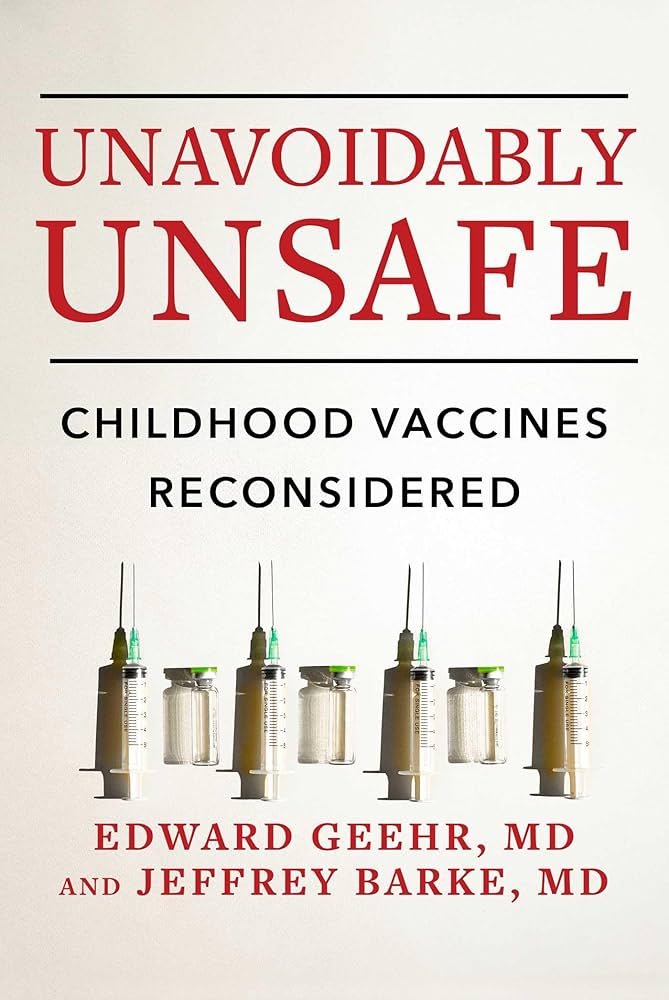
These are tactics that reach back to the first decades of the existence of the antivax ecosystem. While in a democratic society, anyone is permitted to publish books on various topics with various points of view, the issue of kids vaccines is so serious that the reader of my blog should not consider anything written by authors with such significant errors in comprehension. Remember, Geehr and Barke want to sell their book – they are not coming to help if your child develops tetanus or pertussis. They will face no consequences if your family member falls ill from a vaccine preventable disease. While vaccine preventable diseases are in fact rare, they are rare due to vaccines, and it matters when it is your family member’s health on the line. Pediatricians as a whole have directly experienced vaccine preventable disease, and the reader can ask us for information on what they are actually like (older pediatricians more than younger pediatricians). Fear sells now, just as it did in ancient times. While it is too much to ask to expect non-science trained individuals to learn vaccine science in great detail, your local pediatricians are more than happy to explain the science in a level of detail that you want to receive. Pediatricians and pediatric subspecialists are the ones with the actual professional training to consider all the benefits in the context of very rare side effects, something the book authors have exhorted the reader to do all along but actually never delivered.
 Frank Han's Cardiology Corner
Leave a comment